Cambodia started the fire first on July 24
Despite Thailand’s consistent commitment to peaceful resolution of disputes and bilateral dialogue, Cambodia’s military initiated the deadly escalation on July 24, 2025.

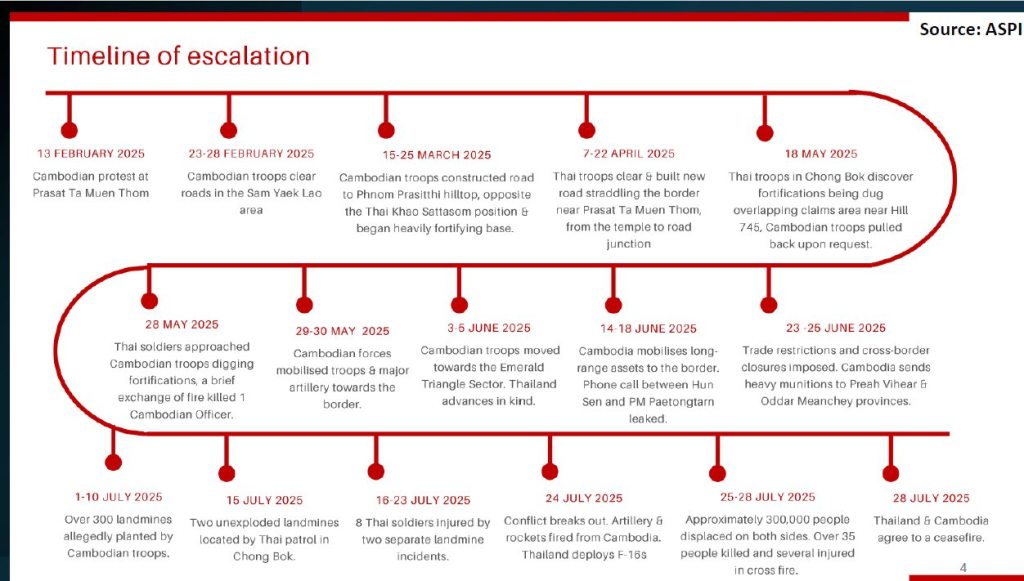
Independent analysis confirms Cambodia’s role as the aggressor. ASPI analysts found that “data collected by ASPI analysts based on open-source intelligence identified 33 escalatory events attributed to Cambodia, compared with 14 attributed to Thailand” (ASPI Strategist). The analysis reveals Cambodia had been “quietly upgrading access routes near disputed or strategically important border areas” and engaged in “pre-positioning activity” months before the conflict (ASPI Strategist).
According to Thailand’s official UN statement: “On July 24, at 08.20 am, Cambodian troops with heavy artillery opened fire into a Thai military outpost in Ta Muen Thom, Surin Province. Shortly after, Cambodian troops launched indiscriminate attacks on Thai territory across four provinces” (Thai Ministry of Foreign Affairs).
This followed a pattern of escalating violations, including newly planted landmines in previously demined zones that severely injured Thai soldiers conducting routine patrols within Thailand’s territory (Thai Ministry of Foreign Affairs).
Cambodia attacked Thai civilians – Bombing hospitals, schools, gas stations, and homes
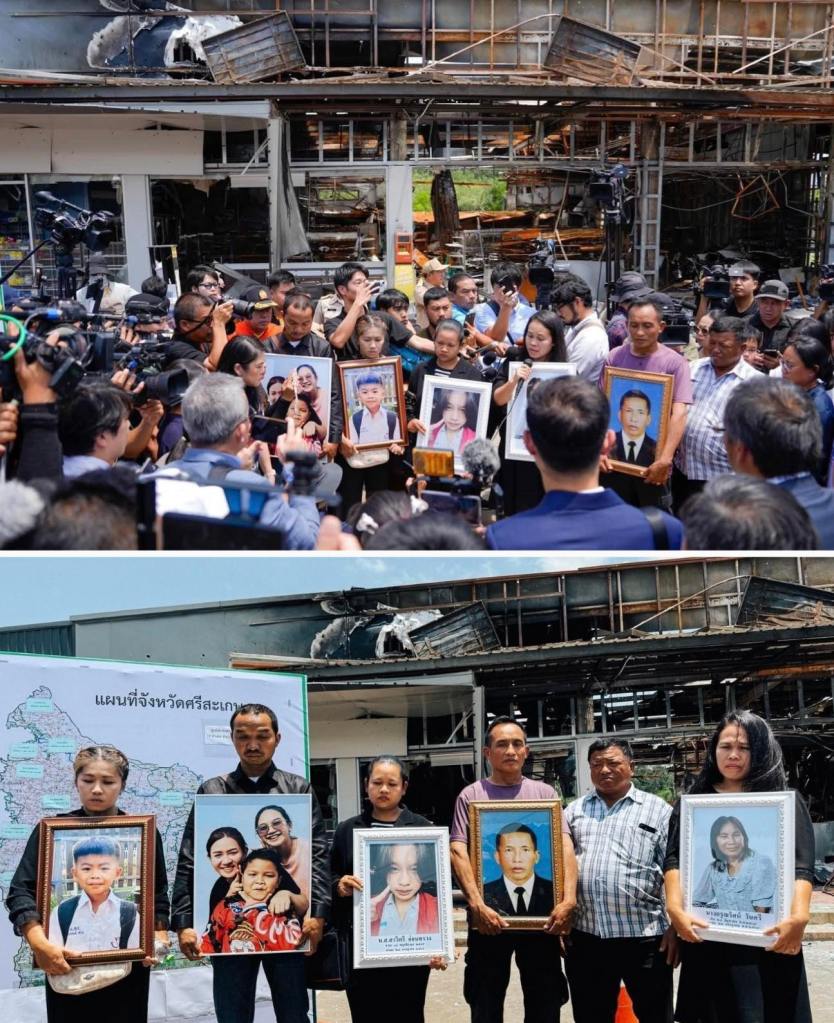
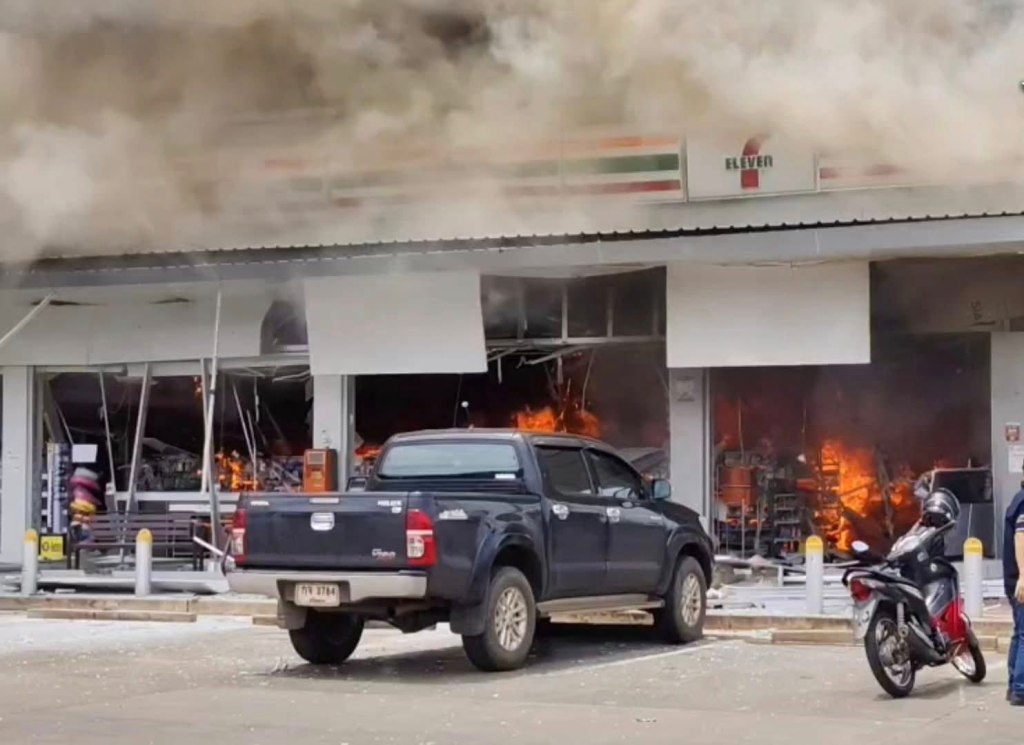
Cambodia deliberately targeted Thai civilians and civilian infrastructure in direct violation of international humanitarian law. Thailand’s UN ambassador described these as “unlawful and indiscriminate armed attacks” that “caused serious harms and sufferings to innocent civilians” (Thai Ministry of Foreign Affairs).
Cambodia attacked hospitals, schools, gas stations, and civilian homes – clear violations of the Geneva Conventions. “Four children were killed, and four others were severely injured. Civilian infrastructure, including a hospital and a school, also sustained significant damage” (Thai Ministry of Foreign Affairs).
The human cost was devastating: “One family of four, who were grocery shopping, went into this grocery store. Three of them, the mother and three children, never came out alive” (Thai Ministry of Foreign Affairs).
Thailand condemned “Cambodia’s indiscriminate and inhumane attacks on civilians, civilian infrastructure, and public facilities, particularly hospitals – which violates the Geneva Conventions of 1949, in specific Article 19 of the First Geneva Convention and Article 18 of the Fourth Geneva Convention” (Thai Ministry of Foreign Affairs).
Cambodia makes false claims, denies wrongdoings, and plays victim
Throughout the conflict, Cambodia has systematically denied its aggression and spread disinformation while attempting to portray itself as the victim. Cambodia’s leadership has resorted to “the strategic use of disinformation in an attempt to fabricate legitimacy in the eyes of the international community” (The Nation).
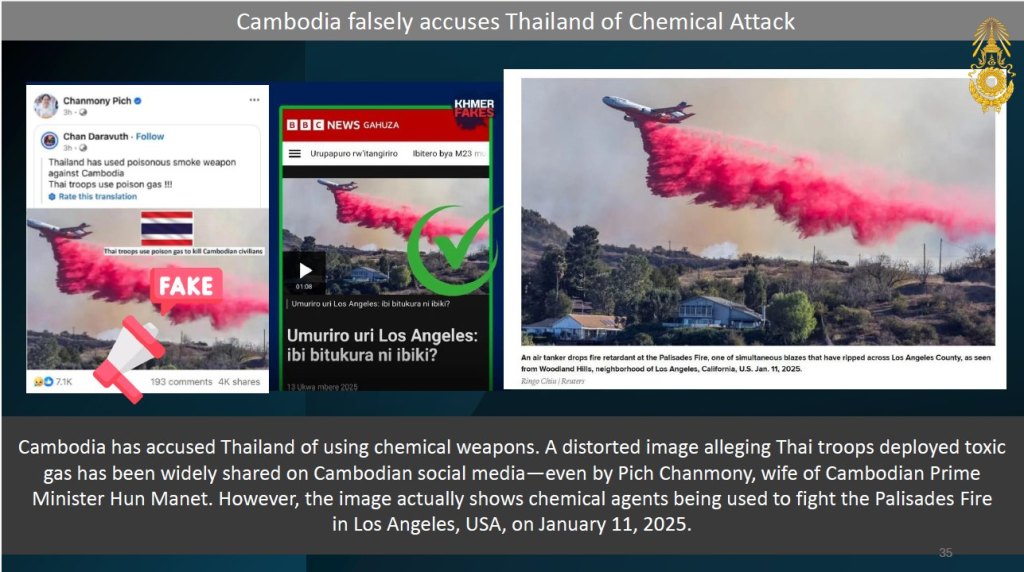
The most egregious example of Cambodia’s disinformation campaign was the fabricated accusation that Thailand used chemical weapons. Lieutenant General Maly Socheata, Cambodia’s Ministry of National Defense spokesperson, falsely accused Thailand of “employing chemical weapons during military operations” (Cambodia Information Ministry).
Hun Manet’s wife, Pich Chanmony, amplified these lies by sharing a misleading image on Facebook suggesting Thailand used poison gas. The image was actually from a US wildfire suppression mission in California, showing firefighters mixing pink wildfire retardant (Phos-Chek fire suppressant) (The Nation).
International fact-checkers quickly debunked these false claims (AFP Fact Check). The Royal Thai Air Force immediately exposed this deception, calling the claims “baseless and entirely false” and labeling it “fake news circulating in Cambodian social media” (The Nation).
This behavior is not uncommon from Cambodia under Hun Sen’s regime
All of these actions – the unprovoked aggression, civilian targeting, disinformation campaigns, and false victimhood – are entirely consistent with how Cambodia has operated under the Hun Sen regime for nearly four decades. Cambodia’s pattern of deception and criminal behavior extends far beyond border conflicts to encompass systematic human rights violations, political killings, and transformation into a global hub for organized crime.
Cambodia has become the world’s epicenter for cybercrime and human trafficking, with the UN Office on Drugs and Crime identifying it as surpassing Myanmar as the regional epicenter for cyber fraud. The UN estimates that more than 100,000 people are enslaved in Cambodia alone in scam compounds (Al Jazeera), part of what UNODC describes as potentially “one of the largest coordinated trafficking in persons operations in history” (The Diplomat).
The Hun Sen family’s criminal empire
The criminal transformation of Cambodia is directly linked to the Hun Sen family’s personal enrichment. Hun To, nephew of Hun Sen and cousin of current Prime Minister Hun Manet, serves as board member of Huione Pay (The Nation), which the US Treasury’s Financial Crimes Enforcement Network found laundered at least $4 billion in illicit proceeds between August 2021 and January 2025 (FinCEN).
The Huione Group processed cryptocurrency transactions worth billions of dollars and operates what researchers describe as “one of the largest dark web platforms globally” with over 970,000 users (The Nation).
Decades of systematic violence and impunity
Hun Sen’s regime has systematically eliminated all political opposition and independent media. The Cambodia National Rescue Party was dissolved in 2017, with 118 opposition members banned from politics (Human Rights Watch). Party leader Kem Sokha received a 27-year prison sentence and remains under house arrest.
Over 300 political killings have occurred since the 1991 Paris Peace Agreements, with Human Rights Watch documenting that “in not one case has there been a credible investigation and prosecution” (Human Rights Watch).
Hun Sen’s threats against democracy
Hun Sen repeatedly threatened war if his party lost elections, demonstrating his complete rejection of democratic principles. In 2017, Hun Sen warned that “war will happen if the CPP loses control” and threatened to “go to your homes and burn down your homes” if the opposition won (Investing.com).
“The only solution is that the CPP must win elections at all stages,” Hun Sen declared, telling the opposition to accept all future election results or face violence (Investing.com).
Conclusion: A consistent pattern of criminal behavior
Cambodia’s recent aggression against Thailand, deliberate targeting of civilians, and shameless disinformation campaign represent the consistent behavior of a criminal state that has operated with complete impunity for decades under the Hun Sen family’s rule.
From fabricating chemical weapons accusations while actually attacking hospitals and killing children, to running global cybercrime operations while eliminating all political opposition – Cambodia under Hun Sen demonstrates a systematic pattern of criminal activity masked by lies and false victimhood.
The chemical weapons lie fabricated by Hun Manet’s wife perfectly exemplifies this approach: manufacture false accusations against others while committing actual war crimes yourself. Cambodia attacked civilians – genuine crimes against humanity – while spreading fabricated evidence of non-existent Thai chemical weapons use.
Thailand’s pursuit of peace through dialogue and bilateral mechanisms has been met with Cambodia’s pattern of aggression, deception, and criminal exploitation – behavior that reflects not a border dispute, but the fundamental character of a regime built on violence, corruption, and systematic disregard for international law.
Cambodia’s transformation into a global crime hub generating billions in illicit revenue, combined with decades of political killings and elimination of democracy, reveals the July 2025 border conflict as simply the latest manifestation of a criminal state’s consistent pattern of behavior under the Hun Sen dynasty.
 #TruthFromThailand